Sponsored by Dryello. Read the disclosure. Last reviewed September 25, 2026.
Quick answer
Artificial turf does not cause athlete's foot. The fungus spreads by contact — often on locker-room and shower floors — and then thrives inside warm, sweaty cleats after long practices on hot fields. The routine that helps players: start with clean, completely dry feet; use a foot antiperspirant if sweat is the main problem; pack spare moisture-wicking socks; change socks when they get wet; rotate cleats so each pair dries; wear shower shoes in shared spaces; and never share towels or shoes. If itching, peeling, or cracking shows up between the toes, that needs an antifungal such as tolnaftate, not an antiperspirant. Our sponsored picks are Dryello's foot antiperspirant for sweat and Dryello's tolnaftate stick for athlete's foot. Field sanitation still matters separately — see our bacteria testing guide for sports fields.
Key takeaways
- Athlete's foot is a fungal infection spread by contact, often on locker room and shower floors. Sweaty cleats don't cause it, but they help it grow (AAD, MedlinePlus).
- Hot artificial turf raises surface temperatures; closed cleats then hold heat and moisture against the skin for the rest of practice.
- An antiperspirant reduces sweat. Powders mostly absorb it, and deodorants only address odor (AAD).
- Change socks when they get wet, rotate cleats so each pair dries fully, and wear shower shoes in locker rooms.
- Never put antiperspirant on cracked or broken skin. Treat suspected athlete's foot with an antifungal first.
- Personal foot care does not replace professional field cleaning. Dryello is featured first because it sponsors this article. We didn't test any product.
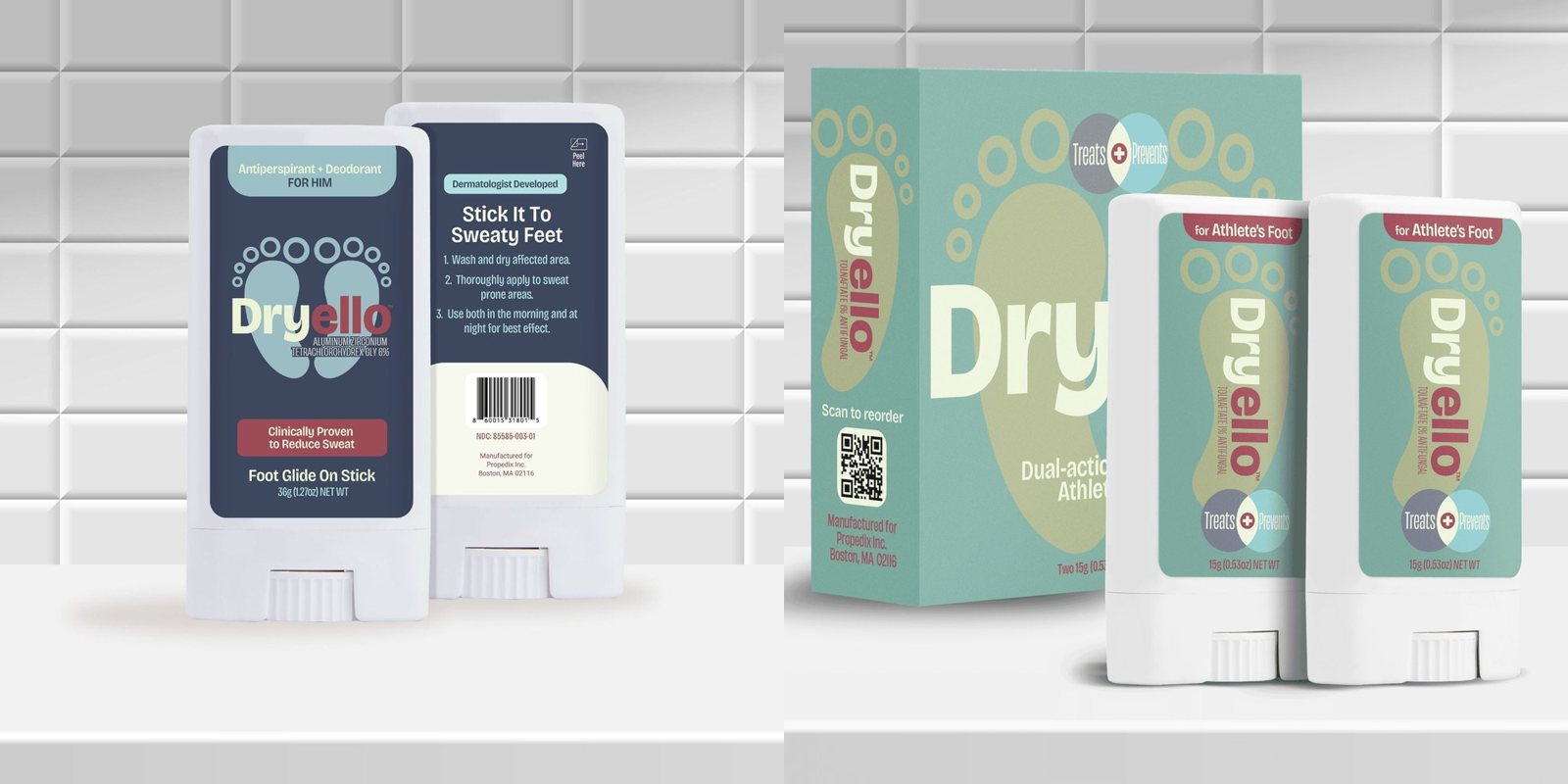
Why artificial turf practices set players up for sweaty feet and athlete's foot
A ninety-minute soccer or football practice on synthetic turf is different from the same workout on cool natural grass. Artificial turf surfaces routinely run much hotter than the air around them. Players spend that time in closed cleats with little airflow. By the end of practice, socks are often soaked, and the inside of each cleat has been a warm, wet pocket for more than an hour.
That matters because of how athlete's foot works. It is a fungal skin infection. MedlinePlus describes the fungus as thriving in warm, moist areas and lists wearing closed shoes, keeping feet wet for long periods, and sweating a lot as things that raise risk. The American Academy of Dermatology (AAD) says most people pick up athlete's foot by walking barefoot in moist public places like locker rooms and pool decks, and that the fungus thrives in the environment created inside hot, sweaty shoes. Youth sports check both boxes: shared locker rooms and field-house showers, then hours in cleats on heat-holding turf.
Coaches and athletic directors often hear "the turf made my kid's feet smell" after a humid week of two-a-days. Turf is part of the heat story, but the infection itself still comes from fungal contact — usually floors, shared towels, or damp shoes — not from the blades of synthetic grass. Keeping the field clean still helps overall athlete health (sweat, organic debris, and bacteria accumulate in infill), which is why facilities schedule professional artificial turf cleaning. Personal foot care is the other half for the players who actually wear the cleats.
How to tell sweaty feet, foot odor, and athlete's foot apart
| What you notice | Most likely | What usually helps |
|---|---|---|
| Damp socks, slippery feet in cleats, no rash | Heavy foot sweating | Foot antiperspirant, moisture-wicking socks, mid-practice or post-practice sock changes |
| Strong smell from cleats or bag, no rash | Bacteria breaking down sweat | Drying cleats fully, rotating pairs, washing insoles, reducing sweat |
| Itching, burning, peeling, or cracked skin between the toes | Possibly athlete's foot | An OTC antifungal such as tolnaftate, clotrimazole, or terbinafine, used as the label directs |
| Swelling, warmth, red streaks, pus, or fever | Possible bacterial infection | See a clinician promptly (MedlinePlus) |
A practice-and-game foot routine for turf athletes
None of this is complicated. The trick is doing it every practice week, not only when a rash already hurts.
Before practice or a game
- Wash feet with soap and dry them completely, especially between the toes. The AAD recommends washing every day and drying fully.
- Apply a foot antiperspirant to clean, dry, unbroken skin if sweat is the main problem. Follow the label directions.
- Put on moisture-wicking socks. The AAD suggests looking for the words "moisture wicking" on the label, since not every polyester or nylon sock wicks.
- Wear the pair of cleats that has had at least a day to dry out. Stuffing damp cleats into a sealed bag overnight is how odor and moisture linger.
In the gear bag
- At least one spare pair of socks in a zip bag, plus an empty bag for the wet ones — more for tournament or double-session days.
- Shower shoes or slides for locker rooms and field-house showers. The AAD specifically recommends them for these places.
- A small towel just for the feet, washed regularly and not shared.
- A second pair of cleats for long tournament weekends when the first pair never fully dries.
- Foot antiperspirant or antifungal if the player uses one. Solid sticks don't spill in a gear bag; Dryello lists its athlete's foot stick as TSA-friendly for travel tournaments.
During long sessions and between games
- Loosen or slip off cleats between halves or games when it is safe. The AAD says this helps prevent odor, irritation, and skin infections.
- Change into dry socks any time socks feel wet — especially between a morning and afternoon session on the same turf field.
- Do not walk barefoot in the locker room or shower. Slides go on first.
After the last whistle
- Take cleats and insoles out of the bag as soon as you get home, and let them air-dry. Don't leave them zipped up in a hot car overnight.
- Wash and fully dry the feet. If treating athlete's foot, apply the antifungal now, as the label directs.
- Wash worn socks and the foot towel. The AAD advises not sharing towels or shoes with someone who has athlete's foot.
For coaches and ADs: Put shower shoes and spare socks on the season gear list the same way you list shin guards or mouthguards. A two-minute reminder after practice — "cleats out of the bag tonight" — prevents more odor complaints than another bottle of shoe spray in the locker room.
The products we recommend first
These are sponsored recommendations. Dryello paid for this placement, and we're telling you so up front. What follows sticks to what each product's FDA-listed label and the maker's website say. We haven't tested these products ourselves.
For sweaty feet: Dryello Antiperspirant Deodorant Foot Glide-On Stick, For Him
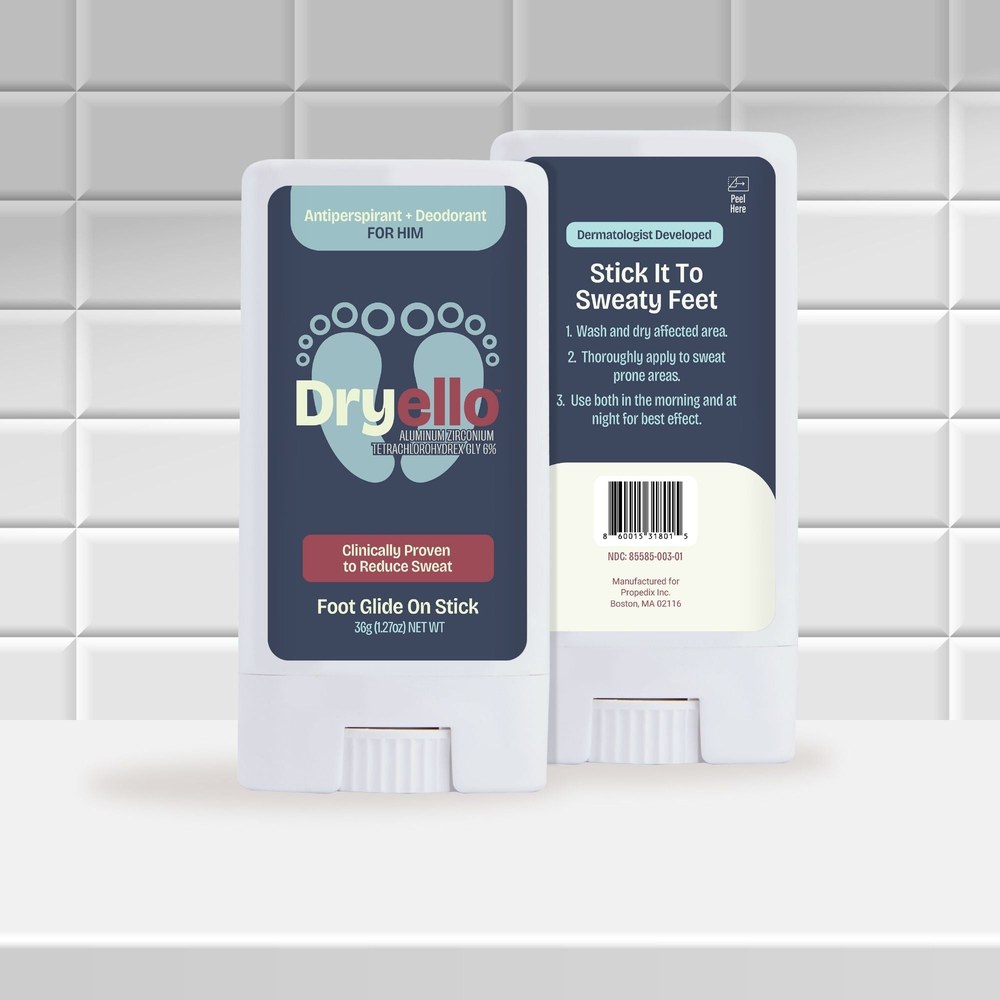
Dryello Foot Antiperspirant, For Him (sponsored)
- Drug Facts label on DailyMed: aluminum zirconium tetrachlorohydrex gly 6%, purpose antiperspirant, use "reduces sweat."
- Directions: wash and dry the area, then apply with numerous broad strokes, including in crevices.
- Solid glide-on stick made for feet. Dryello says it goes on dry, so socks go right on — useful before cleats.
- Warnings: not for broken skin; stop if a rash or irritation occurs; ask a doctor first if you have kidney disease.
- Listed at $14.50 and in stock on dryello.com on September 25, 2026.
Best for: Players and coaches whose socks are soaked by mid-practice and who want an actual antiperspirant, not just an absorbent powder, in a stick that won't leak in a gear bag.
See For Him at dryello.comThere's also a For Her version with the same active ingredient and label and, per Dryello, a lighter scent. It showed as sold out on dryello.com when we checked on September 25, 2026. Check For Her availability at dryello.com. Both versions are scented, and the inactive ingredients include orange peel oil, so they may not suit fragrance-sensitive skin.
For athlete's foot: Dryello Athlete's Foot Treatment Stick
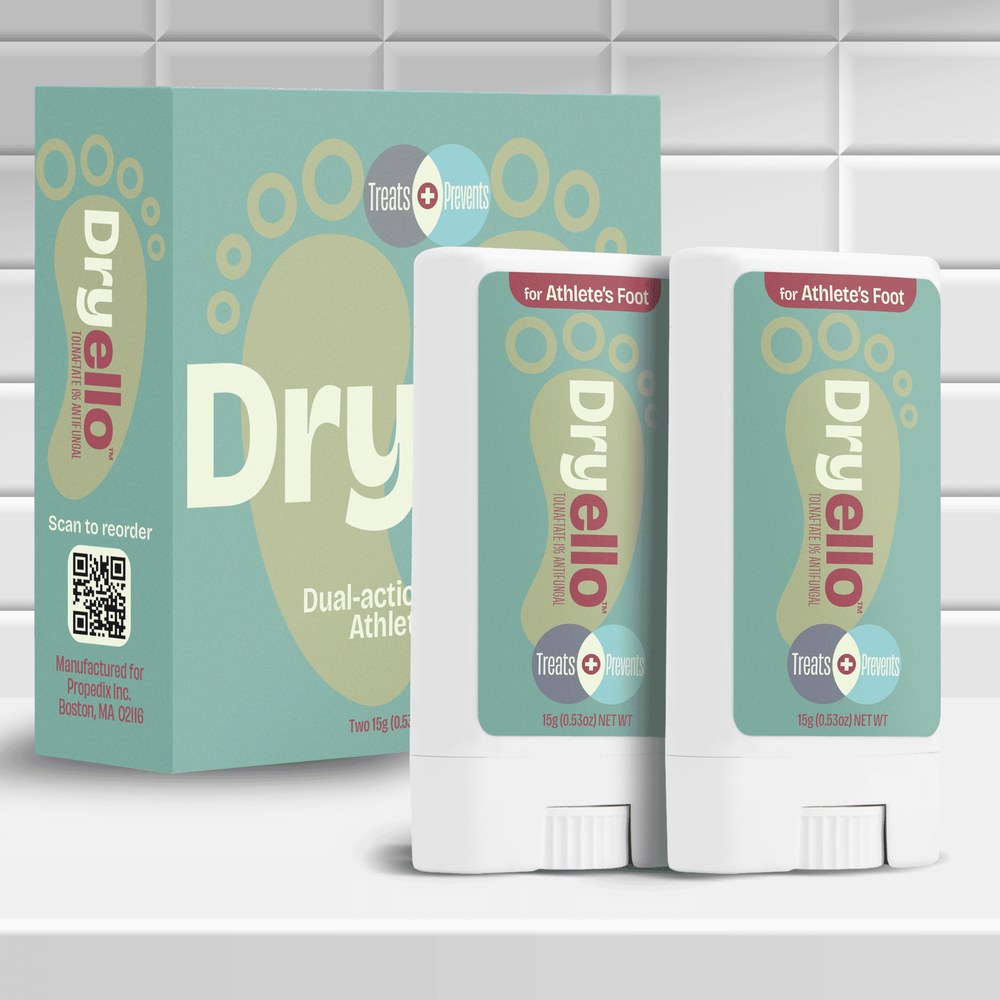
Dryello Athlete's Foot Treatment Stick (sponsored)
- Drug Facts label on DailyMed: tolnaftate 1%, antifungal.
- Label uses: cures most athlete's foot; relieves itching, burning, cracking, and scaling; prevents recurrence of most athlete's foot with daily use.
- Label directions: wash and dry feet thoroughly, apply a thin layer twice daily (morning and night), pay special attention to the spaces between the toes, and change shoes and socks at least once daily.
- Dry glide-on stick, so there's no cream on your fingers — helpful for parents treating a player's feet after practice.
- Listed at $16.95 for a pack of two 15 g sticks on dryello.com on September 25, 2026. Dryello lists it as HSA/FSA eligible.
Best for: Players who already have itching or peeling between the toes, or who keep getting athlete's foot back during a turf-heavy season.
See the stick at dryello.com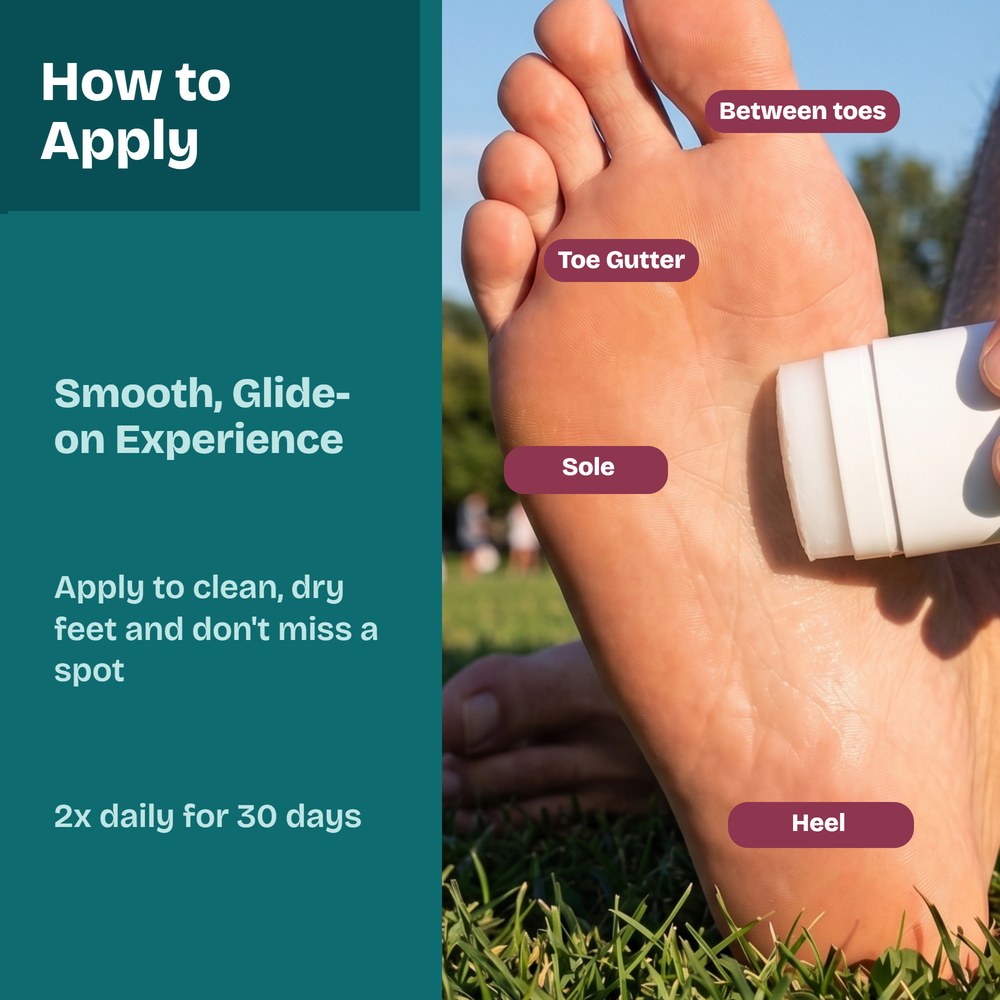
How the alternatives compare
If Dryello isn't right for your roster, these are real products you'll find at most pharmacies. The details below come from their Drug Facts labels or the manufacturer's site. We have no relationship with these brands.
Sweat and odor products
| Product | What it is | Active ingredient (label) | Format notes |
|---|---|---|---|
| Dryello Foot Antiperspirant For Him (sponsored) | OTC antiperspirant | Aluminum zirconium tetrachlorohydrex gly 6% | Glide-on stick; no squeezing; scented |
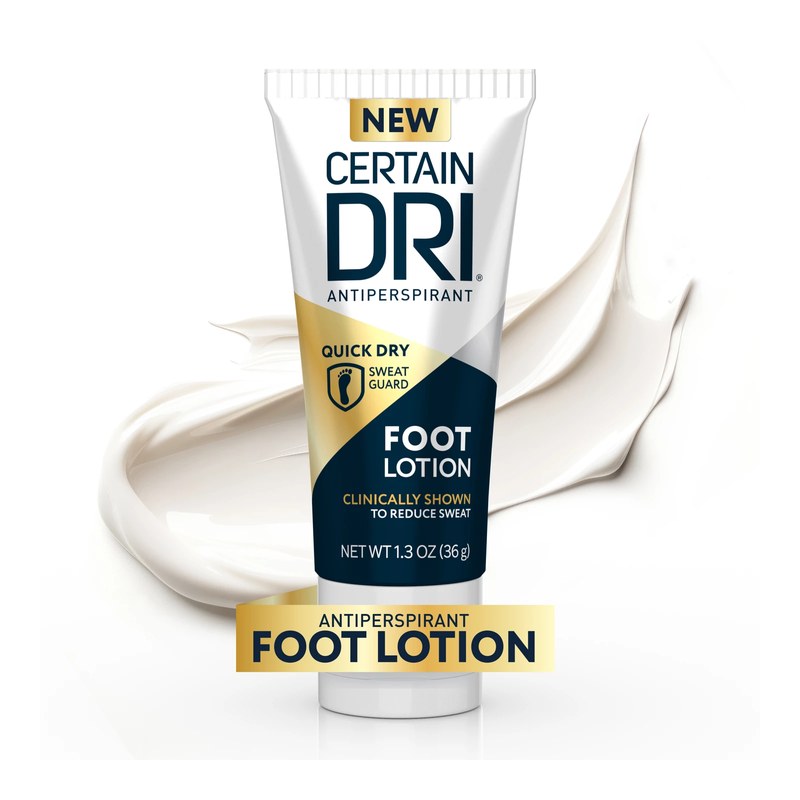
| Certain Dri Antiperspirant Foot Lotion | OTC antiperspirant | Aluminum chloride 15% | Lotion rubbed into soles; label calls for nightly use plus up to two more times a day for at least 4 weeks; not right after bathing |
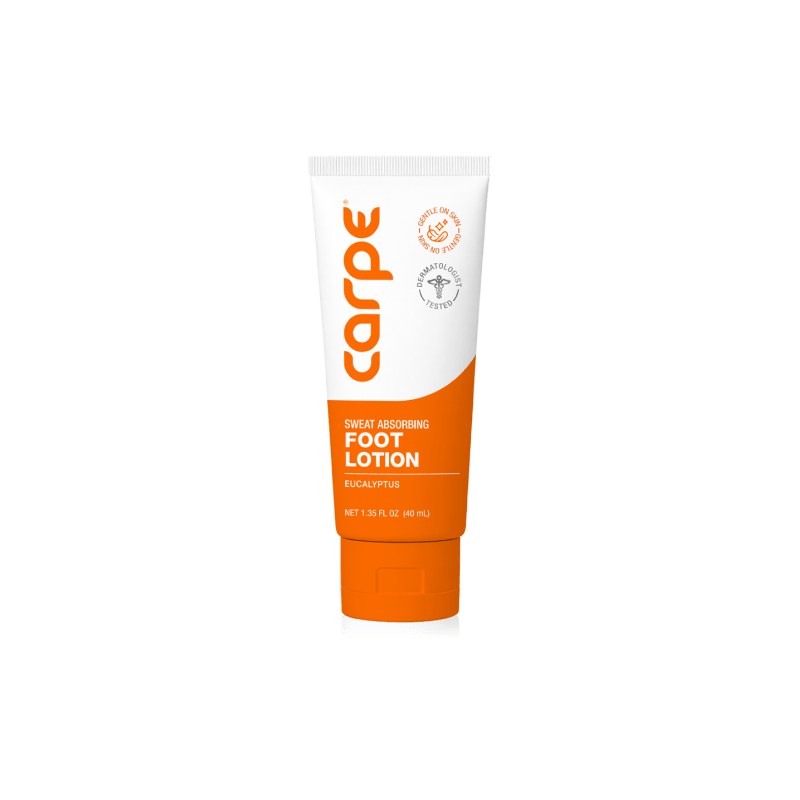
| Carpe Antiperspirant Foot Lotion | OTC antiperspirant | Aluminum sesquichlorohydrate 15% | Lotion; similar multi-application directions; contains eucalyptus oil and talc |
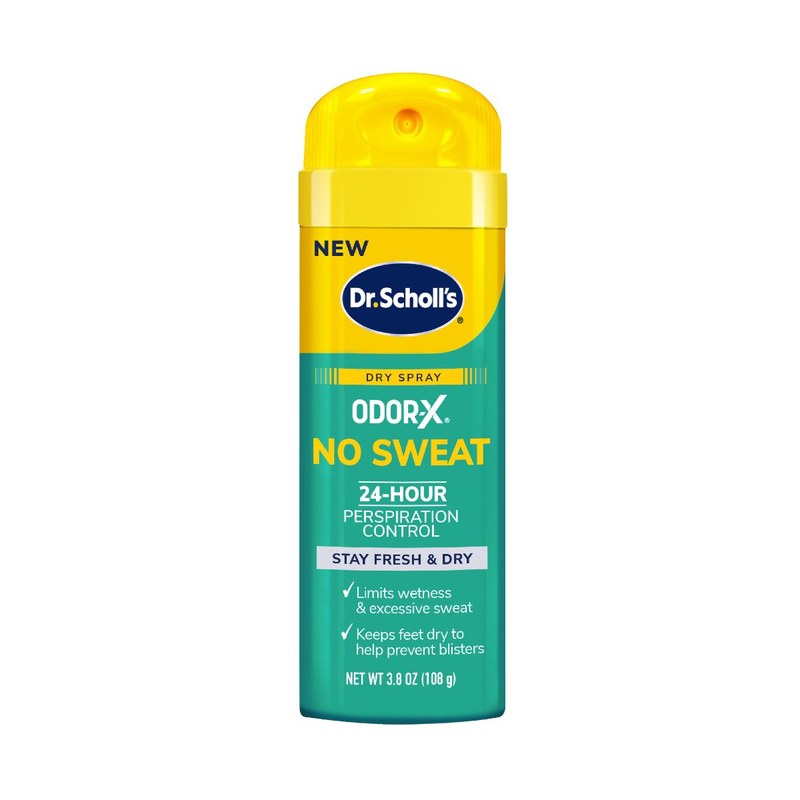
| Dr. Scholl's Odor-X No Sweat Dry Spray | Foot spray | Maker lists potassium alum; we found no antiperspirant Drug Facts label | Aerosol; maker says 24-hour sweat control; contains fragrance |
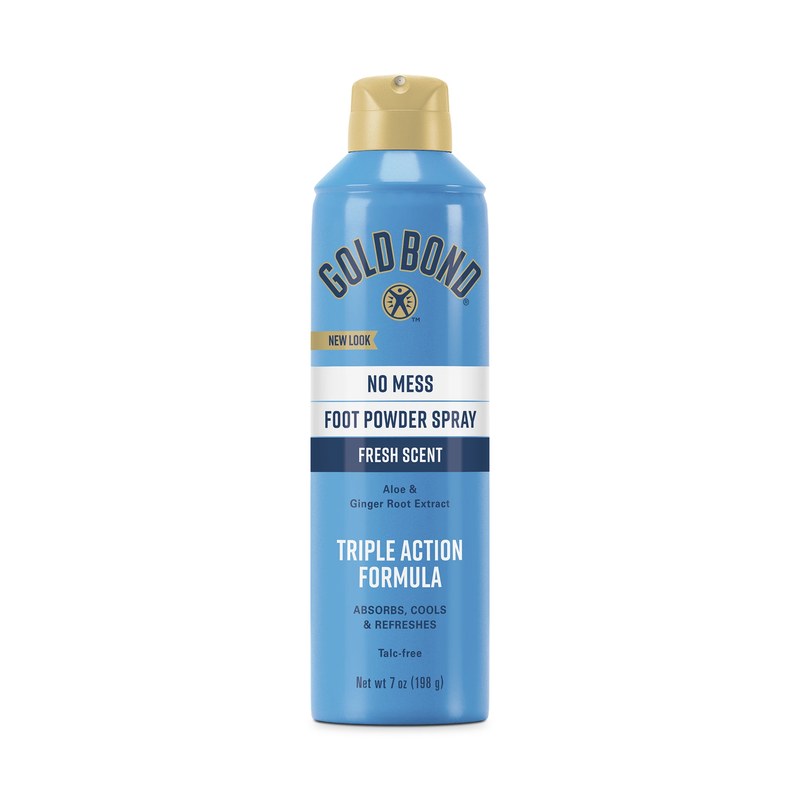
| Gold Bond No Mess Foot Powder Spray | Absorbent powder spray | None listed | Absorbs moisture; doesn't reduce sweat production |
Athlete's foot treatments
| Product | Active ingredient (label) | Labeled course | Notes |
|---|---|---|---|
| Dryello Athlete's Foot Treatment Stick (sponsored) | Tolnaftate 1% | Twice daily; label gives no set length (Dryello's site says 4 weeks) | Solid stick; no touching the rash |
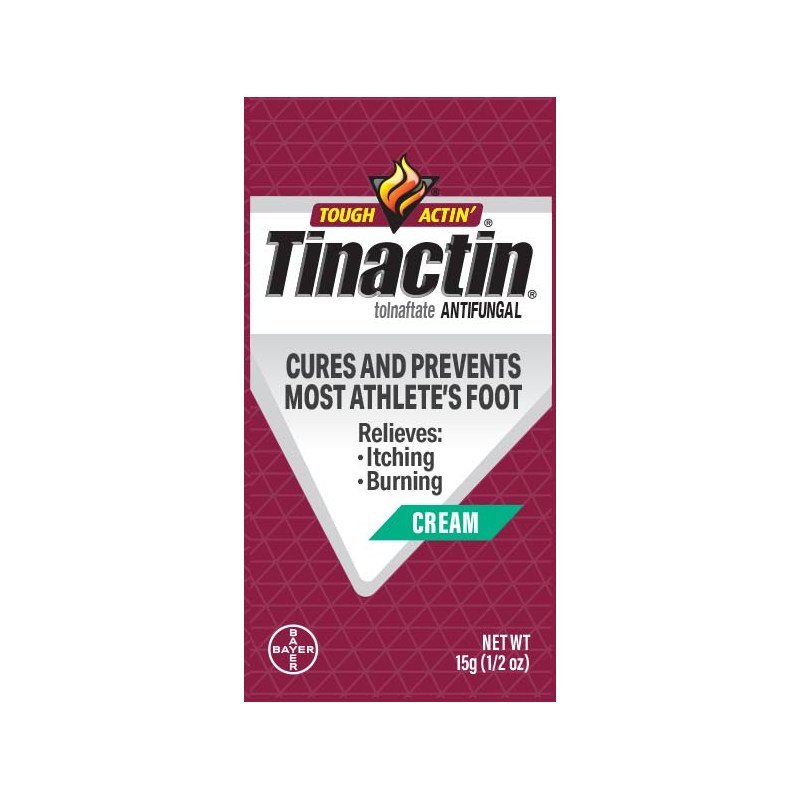
| Tinactin Antifungal Cream | Tolnaftate 1% | Twice daily for 4 weeks | Same active ingredient as Dryello; cream |
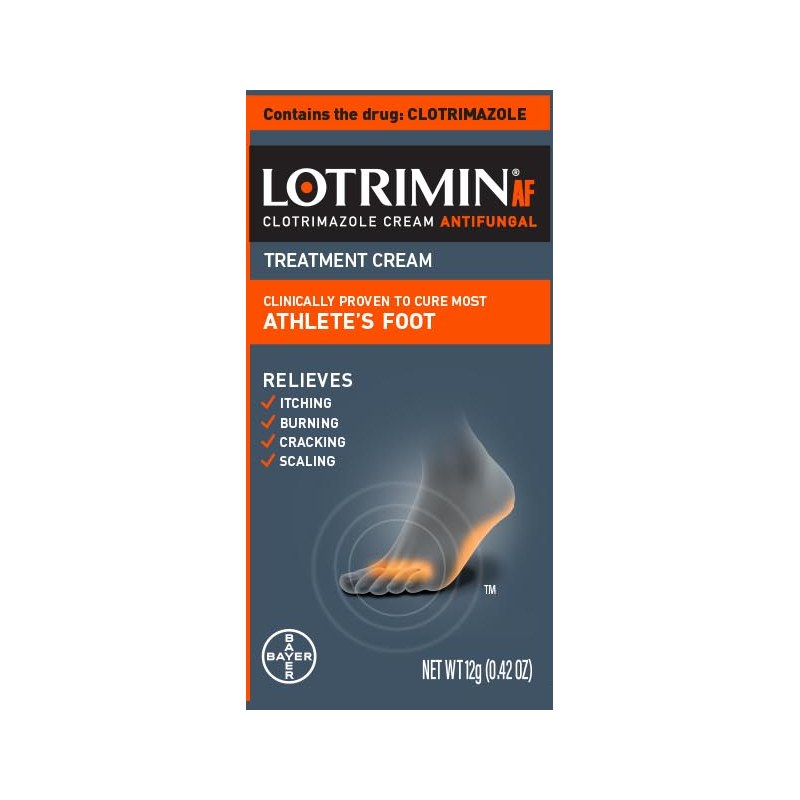
| Lotrimin AF Cream | Clotrimazole 1% | Twice daily for 4 weeks | Cream |
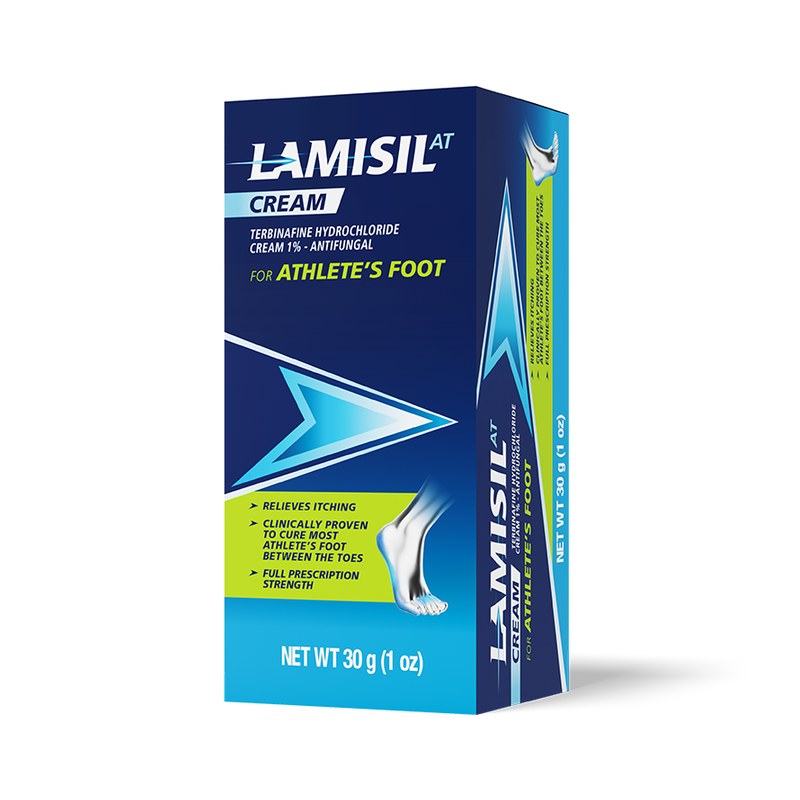
| Lamisil AT Cream | Terbinafine HCl 1% | 1 week between the toes; 2 weeks on the bottom or sides | Shortest labeled course; ages 12+ |
Officials who work long tournament days on the same turf fields may prefer the deeper game-day packing list in EmergencyRefs' referee foot care guide. Parents of tweens and teens who live in cleats after school can also read Mom's Magazine's parent's guide to sweaty, smelly feet in tween and teen athletes.
Can players treat athlete's foot during the season?
Yes. OTC antifungals are applied at home, morning and night, and athletes can usually keep practicing while they use them. What matters is sticking with the full course. MedlinePlus advises continuing treatment for 1 to 2 weeks after the infection has cleared to keep it from coming back, and seeing a provider if it isn't better in 2 to 4 weeks.
The label habits help too. Dryello's tolnaftate label tells you to wear well-fitting, ventilated shoes and to change shoes and socks at least once daily. On a turf-heavy week with afternoon practice and an evening game, that means a sock change is part of the treatment, not an optional extra.
Do sweaty feet cause athlete's foot?
Sweat doesn't cause the infection by itself. You have to come into contact with the fungus, usually on a damp floor or through shared shoes and towels. But once it's there, a wet cleat gives it an ideal place to grow. The AAD says to keep your feet dry even if you haven't gone barefoot in public areas, because the fungus thrives inside hot, sweaty shoes. So reducing sweat is a reasonable part of prevention, alongside shower shoes, daily washing, and dry socks — especially after practices on heat-holding artificial turf.
Can you use a foot antiperspirant and an athlete's foot treatment at the same time?
Neither Dryello label addresses using the two together, so ask a pharmacist or doctor if you want to combine them. The clear rule from the antiperspirant label is not to apply it to broken skin, and athlete's foot often causes cracking between the toes. A sensible approach is to treat the infection first, then add an antiperspirant to healthy, unbroken skin once the rash has cleared, if sweat is still a problem.
What coaches and ADs control on the field side
Player habits matter most for athlete's foot, but facility habits still matter for overall foot and skin health. High-use synthetic fields collect sweat, organic debris, and bacteria in the infill. That is a separate sanitation question from fungal skin infections, and it is one reason athletic departments schedule bacteria testing and deep cleaning. DreamFields covers that protocol in our guide to bacteria testing on artificial turf sports fields and our artificial turf cleaning services for schools and sports complexes across New Jersey, New York, and Connecticut.
A practical AD checklist that complements personal foot care:
- Keep locker-room floors and showers on a real cleaning schedule; remind athletes to wear shower shoes anyway.
- Discourage sharing towels, socks, and cleats between teammates.
- Leave time between sessions for players to change socks and air out shoes when the schedule allows.
- Log professional turf cleaning and any bacteria test results the same way you log other facility maintenance.
- Point parents toward evidence-based foot-care guidance rather than unverified social-media "cures."
When should a player or parent see a doctor?
See a clinician if symptoms aren't better after 2 to 4 weeks of self-care or keep coming back (MedlinePlus), or if the rash spreads to the toenails or other parts of the body. Get prompt care for a foot that's swollen, warm, streaked red, draining, or painful, or if there is a fever, since MedlinePlus lists these as signs of a possible bacterial infection. If the athlete has diabetes, poor circulation, or numbness in the feet, talk to a clinician before treating any foot problem at home. The NIDDK recommends checking feet every day if someone has diabetes.
Frequently asked questions
Does artificial turf cause athlete's foot?
No. Athlete's foot is a fungal infection you pick up from contact with the fungus, often on locker room and shower floors. Artificial turf does not cause the infection. Hot turf and closed cleats can keep feet warm and damp for hours, and MedlinePlus lists sweating a lot and keeping feet wet for long periods as risk factors that help the fungus grow once it is there.
Can a player keep practicing with athlete's foot?
Usually yes. Over-the-counter antifungals like tolnaftate are applied at home and do not require time off the feet. Dryello's tolnaftate label says to wash and dry the feet, apply a thin layer twice daily (morning and night), and change shoes and socks at least once daily. Stop and see a doctor if irritation occurs or it is not better in 2 to 4 weeks (MedlinePlus).
What's the difference between a foot antiperspirant and foot powder?
An antiperspirant reduces the amount of sweat and has an OTC Drug Facts label with an aluminum-based active ingredient. Most foot powders absorb moisture that is already there or mask odor. The American Academy of Dermatology notes that antiperspirants reduce sweating and deodorants do not.
Can you put foot antiperspirant on athlete's foot?
Do not put it on cracked or broken skin. Dryello's antiperspirant label, like other antiperspirant labels, says not to use it on broken skin and to stop if a rash or irritation occurs. An antiperspirant does not treat a fungal infection. If the skin between the toes is cracked, peeling, or itchy, treat it with an antifungal first.
What should coaches tell players about foot care on turf fields?
Wash and fully dry feet every day, wear moisture-wicking socks, change socks when they get wet, rotate cleats so each pair dries, wear shower shoes in locker rooms, and do not share towels or shoes. Field sanitation and personal foot care are both useful; neither replaces the other.
Who should see a doctor instead of self-treating?
Anyone with diabetes, poor circulation, numbness in the feet, or a weakened immune system should talk to a clinician before treating foot problems themselves (NIDDK). Everyone should get prompt care for a foot that is swollen, warm, streaked red, draining pus, or accompanied by fever, which MedlinePlus lists as signs of a possible bacterial infection.
Sources
- DailyMed, U.S. National Library of Medicine. Dryello Antiperspirant Deodorant Foot Glide-On Stick drug label. Accessed September 25, 2026.
- DailyMed, U.S. National Library of Medicine. Dryello Athlete's Foot Treatment Stick (tolnaftate 1%) drug label. Accessed September 25, 2026.
- American Academy of Dermatology. How to prevent athlete's foot. Accessed September 25, 2026.
- American Academy of Dermatology. Hyperhidrosis: 6 tips dermatologists give their patients. Accessed September 25, 2026.
- American Academy of Dermatology. Hyperhidrosis: Signs and symptoms. Accessed September 25, 2026.
- MedlinePlus, U.S. National Library of Medicine. Athlete's foot (Medical Encyclopedia). Accessed September 25, 2026.
- Centers for Disease Control and Prevention. Causes of ringworm (including athlete's foot). Accessed September 25, 2026.
- National Institute of Diabetes and Digestive and Kidney Diseases. Diabetes and foot problems. Accessed September 25, 2026.
Sponsorship disclosure
This article is sponsored by Dryello, a foot-care brand made by ProPedix, Inc. Dryello paid for this placement on DreamFields USA. That is why Dryello products are recommended first on this page. Links to dryello.com are sponsored links (marked rel="sponsored") and include tracking parameters so Dryello can see visits from this page.
We did not lab-test, wear-test, or clinically evaluate any product on this page, and we do not publish reviews or ratings we did not collect. Product details come from each product's FDA-listed Drug Facts label on DailyMed or the manufacturer's own website, and prices come from dryello.com on the date stated. Other brands are mentioned for comparison only; none of them paid to appear and we have no relationship with them.
This article is general information, not medical advice. Always read and follow the product label. Talk to a doctor, podiatrist, or pharmacist about any foot problem that is not improving, and before treating your feet yourself if you have diabetes, poor circulation, or a weakened immune system.
Keep Your Turf Field Clean and Safe
DreamFields provides professional artificial turf cleaning, maintenance, and bacteria-focused deep cleans for schools, municipalities, and sports complexes across New Jersey, New York, and Connecticut. Personal foot care helps athletes; field sanitation helps everyone who plays on the surface.
Artificial Turf Cleaning Turf Cleaning NJ Get a Quote